이정범 · 2026-11-16 · EN / KR
놀이를 정신병으로 번역하는 권력: ‘4대 중독법’에서 WHO 질병코드(6C51) 강행까지, 게임 병리화(Pathologization)의 정치학
Translating Play into Pathology: The Politics of Branding Video Games as an Addiction and Mental Illness in South Korea
게임을 마약·알코올·도박과 동급으로 묶으려 했던 2013년 ‘4대 중독법’ 파동부터 WHO 게임이용장애(6C51) 질병코드 국내 도입 시도와 지자체 ‘4대 중독 공모전’ 촌극까지. 살인적인 입시·노동 구조라는 원인은 외면한 채 청년 세대의 가장 값싼 여가를 ‘정신질환’으로 낙인찍는 관료·의료 카르텔의 생명권력(Biopolitics)을 비판한다.
1. Biopolitics and the Medicalization of Moral Panic
Throughout modern history, whenever an emerging cultural medium challenges the authority of older generations or escapes traditional state control, power responds in two stages. First comes police and legal suppression (censorship, bans, curfews). When direct suppression faces constitutional resistance, power pivots to a far more insidious strategy: medicalization (병리화).
As the philosopher Michel Foucault analyzed in his history of madness and biopolitics, modern authority governs most effectively not when it swings the executioner’s sword, but when it puts on a white lab coat and diagnoses non-conforming behavior as a clinical disease. Once a cultural habit is reclassified as a psychiatric disorder, censorship no longer looks like tyranny—it looks like "public health treatment."
Nowhere in the democratic world has this political translation of play into pathology been pursued more relentlessly than in South Korea’s decades-long war over "Game Addiction."
2. Narcotics, Alcohol, Gambling... and Video Games: The "Four Major Addictions" Scandal
In 2013, a coalition of lawmakers backed by medical lobbies and the Ministry of Health and Welfare introduced the infamous Addiction Prevention, Management, and Treatment Act, universally remembered as the "Four Major Addictions Bill" (4대 중독법).
The bill proposed placing video games in the exact same statutory category as:
- Narcotics (Drugs)
- Alcohol
- Gambling
[The 2013 'Four Major Addictions' Framework]
Narcotics (Criminalized) + Alcohol (Toxic Substance) + Gambling (Speculative Ruin)
+ Video Games (Digital Culture & Export Industry)
→ Grouped under a single National Addiction Control Commission
Even more telling was the institutional machinery behind the bill: proposals circulated to levy a mandatory "addiction healing tax" (치유 부담금) on game companies’ annual revenues to fund psychiatric centers, prevention bureaucracies, and state-affiliated counseling agencies.
Although fierce resistance from players and creators prevented the 2013 bill from passing the National Assembly, the ideological framing never died. Over a decade later, in the mid-2020s, local governments and public health centers (such as the infamous Seongnam City addiction contest scandal) were still routinely grouping "Internet & Games" alongside drugs, alcohol, and gambling in public health campaigns—proving how deeply the stigma of pathology remains embedded in South Korea’s administrative consciousness.
3. The Battle Over ICD-11 (6C51): Turning a Diagnosis into an Administrative Weapon
After the legislative failure of the Four Major Addictions Bill, the bureaucratic-medical alliance found a powerful external lever in 2019, when the World Health Organization (WHO) voted to include Gaming Disorder (Code 6C51) in the 11th revision of the International Classification of Diseases (ICD-11).
While major gaming nations in North America and Europe responded cautiously—noting the fierce scientific debate among psychologists over whether excessive gaming is a standalone primary disease or a symptom of underlying depression, anxiety, and social isolation—South Korea’s health bureaucracy immediately moved to codify 6C51 into the Korean Standard Classification of Diseases (KCD).
Why is the domestic codification of a disease code so fiercely contested in South Korea? Because in Korea’s hyper-centralized administrative system, a KCD code is never merely a neutral medical statistic:
- Automatic Regulatory Trigger: Once video games are officially classified as a disease vector under national statistics, health and education ministries gain permanent statutory justification to expand regulatory budgets, impose mandatory "preventive" restrictions, and levy industry surcharges.
- Stigmatizing an Entire Generation: In a society obsessed with academic and corporate credentials, creating a psychiatric diagnostic code for "gaming disorder" threatens to turn millions of ordinary youths into clinical patients whenever their leisure habits clash with parental expectations.
4. Scapegoating the Symptom to Hide the Cause
The deepest intellectual dishonesty of the "game pathology" movement lies in its inversion of cause and effect.
Why do South Korean teenagers and young adults spend long hours inside digital worlds?
- South Korean youth face the longest study hours, the most grueling college entrance competition, and some of the lowest youth happiness indices in the OECD.
- Public parks, community sports facilities, and unstructured third spaces for adolescents have been systematically erased by urban real-estate development and private cram schools (hagwons).
- For a teenager returning home from a cram school at 11:00 PM with neither time nor money, logging into an online game with friends is often the only affordable, accessible space of social connection, agency, and relief.
Blaming video games for youth distress in South Korea is like blaming painkillers for the existence of a fracture. Rather than reforming a crushing educational and labor system that deprives young people of sleep, leisure, and hope, politicians, bureaucrats, and paternalistic elites point their fingers at the monitor and declare: "The screen made our children sick."
5. Conclusion: Play Is Not a Disease to Be Cured
In Homo Ludens, Johan Huizinga demonstrated that play (ludus) is not a secondary byproduct of civilization; civilization itself arises in and as play.
Excessive immersion in any human activity—whether work, exercise, shopping, exam preparation, or gaming—can accompany psychological distress. Yet no government proposes a "Studying Disorder" code when teenagers collapse from 16-hour cram-school marathons, nor a "Workaholism Tax" on conglomerates when employees suffer burnout. Only play—autonomous, unproductive pleasure that does not serve the state’s exam or productivity metrics—is singled out as a mental illness.
South Korea must end its decades-long attempt to medicalize youth culture. The state’s task is not to put a psychiatric patient wristband on citizens who play games, nor to build bureaucratic fiefdoms out of "addiction healing funds." It is to build a society where life outside the monitor is humane enough that no one needs to escape into a screen just to breathe.
1. 생명권력(Biopolitics)과 도덕적 패닉의 ‘의료화’
근대 역사에서 기성세대와 국가 권력이 자신이 이해하지 못하거나 통제하기 까다로운 새로운 청년 문화를 마주했을 때, 억압은 늘 두 단계로 진화해 왔다. 첫 번째 단계는 경찰력과 법률을 동원한 직접적 탄압(사전검열, 단속, 통금)이다. 그러나 직접적 검열이 헌법적 저항에 부딪히면, 권력은 훨씬 교묘하고 반박하기 어려운 두 번째 무기를 꺼내 든다. 바로 **‘의료화(Medicalization)와 병리화(Pathologization)’**다.
철학자 미셸 푸코가 광기와 생명권력의 역사에서 통찰했듯, 현대 권력이 가장 막강해지는 순간은 감옥의 쇠창살을 휘두를 때가 아니라 하얀 의사 가운을 걸치고 비순응적 행동을 ‘치료해야 할 질병’으로 진단할 때다. 어떤 문화적 향유가 ‘정신질환’의 목록에 등재되는 순간, 국가의 통제와 검열은 더 이상 폭력이 아니라 ‘국민 보건과 치유’라는 거룩한 외피를 입게 된다.
전 세계 민주주의 국가 중 놀이를 질병으로 번역하려는 이 정치적 프로젝트가 가장 집요하게 추진되어 온 나라가 바로 대한민국이다.
2. 마약, 알코올, 도박… 그리고 게임: ‘4대 중독법’이라는 집단 광기
2013년 대한민국 국회와 보건복지부, 그리고 일부 정신의학계 카르텔은 세계 문화사에 길이 남을 기괴한 법안을 발의했다. 정식 명칭 「중독 예방·관리 및 치료를 위한 법률안」, 일명 **‘4대 중독법’**이었다.
이 법안의 핵심은 국가가 특별 관리해야 할 **‘4대 중독 유발 물질 및 행위’**로 다음 네 가지를 나란히 묶는 것이었다.
- 마약 (형사 처벌 대상인 불법 향정신성 약물)
- 알코올 (신체적 독성을 지닌 약물)
- 도박 (재산을 파탄 내는 사행 행위)
- 인터넷 게임 (대한민국 콘텐츠 수출의 절반 이상을 차지하는 문화 예술·디지털 미디어)
[2013년 ‘4대 중독법’의 기괴한 등식]
마약(범죄) + 알코올(약물) + 도박(사행) = 게임(문화 콘텐츠)
→ 국가중독관리위원회 산하 통합 통제 및 ‘중독 치유 부담금’ 징수 추진
더욱 노골적이었던 것은 그 이면에 숨겨진 행정·예산적 욕망이었다. 게임을 마약·도박과 동급의 중독 유발물로 규정한 뒤, 게임사들의 매출에서 의무적으로 **‘중독 치유 부담금(기금)’**을 징수해 보건 당국 산하의 예방 센터, 상담 기구, 병원 연구 예산을 충당하겠다는 구상이 공공연히 논의되었다.
게이머와 업계의 격렬한 저항으로 2013년 법안은 끝내 폐기되었지만, 그 망령은 결코 죽지 않았다. 그로부터 10여 년이 흐른 2020년대 중반에도 성남시 등 지자체와 보건소들이 ‘4대 중독 예방 공모전’을 열며 여전히 마약·알코올·도박 옆에 당연하다는 듯 ‘인터넷 게임’을 끼워 넣는 촌극을 반복하고 있다. 대한민국 행정 관료제의 무의식 속에서 게임은 여전히 ‘문화’가 아니라 ‘합법적 마약’으로 코드화되어 있는 것이다.
3. WHO 질병코드(6C51) 전쟁: 통계 분류를 ‘규제의 방아쇠’로 삼으려는 자들
‘4대 중독법’이 입법 문턱에서 좌절되자, 게임을 병리화하려는 세력은 2019년 세계보건기구(WHO)의 제11차 국제질병표준분류기준(ICD-11) 개정안에서 천군만마를 얻었다. WHO가 **‘게임이용장애(Gaming Disorder, 코드 6C51)’**를 질병 코드로 등재하기로 결정한 것이다.
미국과 유럽 등 주요 선진국들은 즉각 신중론을 폈다. 과도한 게임 몰입이 독립된 원발성 정신질환인지, 아니면 우울증·불안장애·가정불화·사회적 고립이라는 근본 원인이 표출된 ‘2차적 증상(대처 기제)’인지를 두고 전 세계 심리학계와 정신의학계 내부에서도 학술적 합의가 전혀 이루어지지 않았기 때문이다.
그러나 한국의 보건 당국과 관련 학계 일각은 기다렸다는 듯 한국표준질병사인분류(KCD)에 이를 등재하기 위해 총공세를 펼치고 있다. 왜 한국에서 질병코드 등재 여부가 이토록 사활을 건 전쟁터가 되었는가?
- 자동 발동되는 행정 규제의 방아쇠: 관료주의가 극도로 발달한 한국 사회에서 KCD 질병코드 등재는 단순한 ‘의학적 통계’로 끝나지 않는다. 게임이 국가 공인 질병 원인으로 찍히는 순간, 보건·교육·여성가족 부처가 개입할 법적 명분이 자동 생성되며 과거 실패했던 부담금 징수와 강제적 예방 규제가 ‘보건 행정’의 이름으로 부활할 고속도로가 깔리게 된다.
- 일상의 환자화(Patientification): 입시와 스펙 경쟁에 매몰된 한국 사회에서 ‘게임이용장애’라는 공식 정신과 진단명은, 자녀의 게임 시간을 못마땅해하는 부모와 학교 현장에서 평범한 청소년들을 손쉽게 ‘정신질환 환자’로 낙인찍는 가장 폭력적인 도구로 악용될 위험이 크다.
4. 원인과 결과의 도치: 누가 청년들을 모니터 앞으로 내몰았는가
게임을 질병으로 규정하는 담론의 가장 비겁한 지점은 사회 구조적 원인과 결과를 정반대로 뒤집어 놓는 기만성에 있다.
대한민국 청소년과 청년들이 왜 그토록 디지털 가상 세계에 깊이 몰입하는가?
- 한국 청소년들은 OECD 최장 시간의 학습 노동과 입시 경쟁에 시달리며, 아동·청소년 삶의 만족도는 수년째 최하위권을 맴돌고 있다.
- 도시 개발과 사교육 열풍 속에 청소년들이 돈 안 들이고 뛰어놀 수 있는 공터, 체육 시설, 문화 공간은 일찌감치 사라졌다.
- 밤 10시, 11시에 학원에서 파김치가 되어 돌아온 청소년에게 시간도 돈도 들이지 않고 또래 친구들과 유대감을 나누며 성취감과 자율성을 느낄 수 있는 공간은 사실상 모니터 속 온라인 게임이 유일하다.
숨 쉴 구멍 하나 없는 입시 지옥과 노동 소외라는 ‘골절상’은 그대로 방치한 채, 그 고통을 잊기 위해 찾은 가장 값싸고 무해한 ‘진통제’인 게임을 가리켜 **"저 진통제가 우리 아이들을 병들게 했다"**고 소리치는 것이 대한민국 기성세대와 관료들의 진단서다.
5. 결론: 놀이는 치료해야 할 질병이 아니다
네덜란드의 문화사학자 요한 하위징아(Johan Huizinga)는 명저 《호모 루덴스(놀이하는 인간)》에서 놀이가 문명의 부산물이 아니라, 문명 그 자체가 놀이 속에서 탄생했다고 역설했다.
인간의 모든 활동—일, 공부, 운동, 쇼핑, 주식 투자, 그리고 게임—은 삶의 균형이 무너졌을 때 과몰입과 고통을 수반할 수 있다. 그러나 하루 16시간씩 입시 문제집에 매달리다 쓰러지는 학생을 보고 ‘학습중독장애(Studying Disorder)’ 질병코드를 신설하자는 관료는 없으며, 주 70시간 과로에 시달리는 직장인을 보고 대기업에 ‘노동중독 치유 부담금’을 매기자고 주장하는 정치인도 없다. 오직 국가의 생산성 지표와 입시 성적에 복무하지 않는 **‘자율적인 놀이와 쾌락’**만이 정신병의 심판대 위에 오른다.
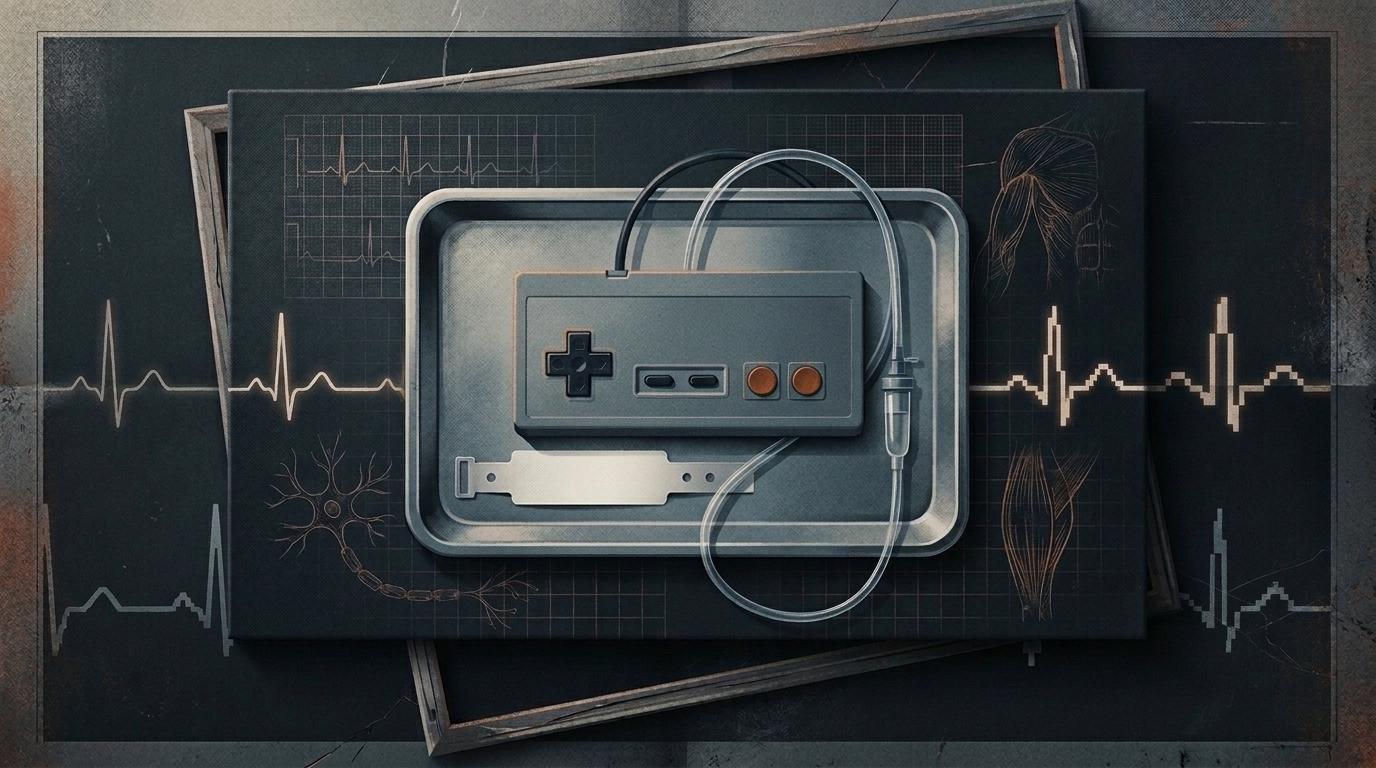
놀이를 정신병으로 번역하여 행정 권력과 예산을 확장하려는 시도는 이제 멈춰야 한다. 국가가 해야 할 일은 게임 패드를 쥔 시민의 손목에 정신질환자 인식표를 채우는 것이 아니라, 모니터 밖의 현실을 모니터 속 세상만큼이나 숨 쉴 만한 곳으로 만드는 일이다.
이 기사가 마음에 드셨나요?
동료나 커뮤니티에 원클릭으로 쉽게 복사하여 공유할 수 있습니다.
댓글
GitHub 계정으로 로그인하여 댓글을 남기거나 반응(이모지)을 남기실 수 있습니다.